
Keeping Your Home Warm This Autumn – Curtains, Blinds and Insulation Tips
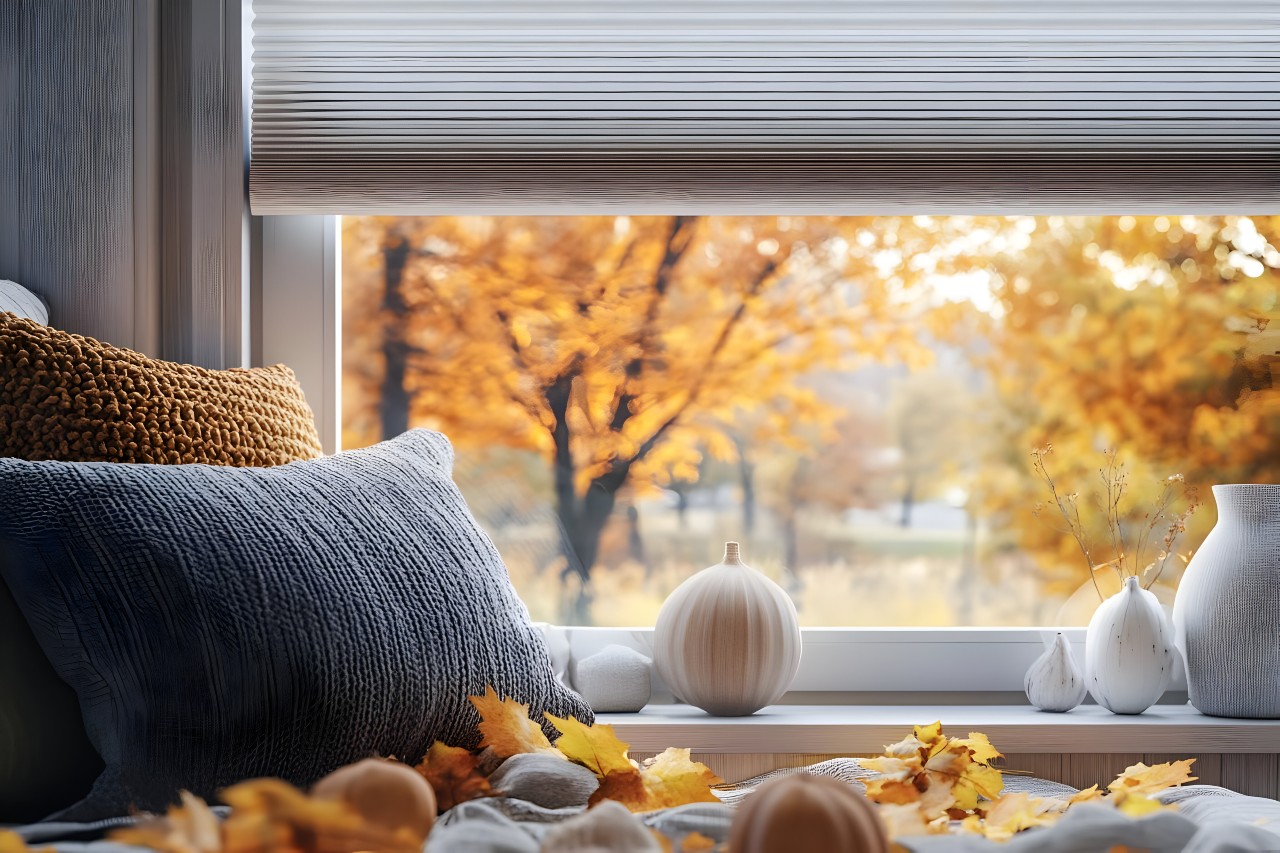
Why your windows matter when the evenings draw in
There is a moment every autumn when the evenings close in, the heating goes on for the first time and you notice which rooms are stubbornly chilly. Very often, the culprit is the window. Glass lets heat escape far more easily than a wall does, and even a small gap around a frame can send a steady trickle of cold air into the room.
The good news is that you do not have to replace your windows to make a difference. The right curtains and blinds, chosen and fitted properly, can help you keep the warmth in and make your home feel cosier, and they can look beautiful while they do it. Here is what we would think about before the cold sets in.
Start by finding the draughts
Before you choose anything new, spend ten minutes on a draught check. On a windy day, hold the back of your hand near the edges of your windows and doors and see where you can feel moving air. Look for daylight around frames, listen for whistling, and notice whether your curtains move when the windows are shut. Any of these tell you where the cold is getting in.
Sealing gaps with draught-proofing strips is one of the simplest jobs you can do, but do not block the vents and air bricks that your home needs for fresh air and to prevent damp. The Energy Saving Trust’s advice on windows and doors lists thermal curtains among the simple upgrades that help cut heat loss, alongside options such as double glazing. Once the gaps are dealt with, your window dressings can do the rest.
Choose curtains with the right lining
Two pairs of curtains can look identical on the rail and behave very differently on a cold night. The difference is in the lining. When we make bespoke curtains, you can choose from standard cotton lining, blackout lining, thermal lining and interlining. Interlining is a soft, blanket-style layer that sits between the main fabric and the lining, and it adds an insulating quality that is especially welcome in older, draughty rooms.
Fabric weight also matters. Velvets, wools and other heavier fabrics naturally hold more warmth than a light cotton or linen, though a good lining can improve a lighter fabric too. Our team can show you samples so you can see and feel the difference in the showroom.
Fit is just as important as fabric. Curtains work best when they hang close to the window, are generous enough in width to cover it fully and fall to the floor or just above a radiator. Try to avoid draping fabric over a radiator, which stops the heat reaching the room. Simple details such as returning the curtain to the wall at the end of the track help stop cold air slipping in at the sides. Take a look at our curtain range to see the fabrics, linings and hanging styles available. And whatever you choose, draw them at dusk to keep the day’s warmth inside.
Blinds that keep the heat in
Curtains are not the only option. If you prefer something sleeker, or you have a small window, a well-chosen blind can also help.
Duette blinds are one of our favourites for cooler months. Their honeycomb construction traps air in small pockets, creating an extra barrier at the window, so they help the room feel warmer in winter and cooler in summer. They also filter light softly and come in a wide range of colours and pleat sizes.
Roman blinds are another good choice, and they can be made in beautiful fabrics that match your curtains. Ask us about lining options when you order. A standard roller blind will make less difference than a lined curtain or a honeycomb blind, but it is still better than a bare window, and it works well as a second layer behind curtains.
Plantation shutters offer another route. They provide excellent light control and privacy, and because they are solid and fit closely to the frame, they add a useful layer of insulation too. If you already have shutters, adding curtains in front creates a very cosy combination.
Layer up for the best results
The best insulation often comes from layering. A blind close to the glass with curtains in front traps still air between the two, which slows the movement of heat. A Duette blind close to the glass with lined curtains in front is a particularly effective pairing. It also gives you flexibility. On a sunny autumn afternoon you can open everything and let the light in, and as the sun drops you can close the blinds and draw the curtains.
A simple autumn checklist
- Check your windows and doors for draughts and seal what you can.
- Look at your existing curtains. Are they lined? Do they fit the window properly?
- Keep radiators clear so heat can circulate.
- Draw curtains and close blinds at dusk.
- Consider a door curtain over a draughty front door.
- Plan ahead. Made-to-measure curtains and blinds take a little time to make, so order before the coldest weather arrives.
Come and see the difference
Since 1975, PeterJohn Interiors has helped families in Berkhamsted, Aylesbury and the surrounding villages to make their homes more comfortable. Our design consultants, including Sarah, who has been with us for 40 years, can talk you through fabrics, linings and blinds and help you find the right balance of style and warmth. Visit one of our showrooms to see the samples in person, or arrange a free home consultation and we will come to you, measure up and advise on what will work best for your windows.